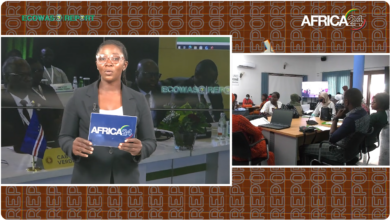
In West Africa, women currently hold just over one in five parliamentary seats. To close this gap, ECOWAS is seeking to accelerate reforms and achieve 50% female representation in elected positions by 2035. In Abuja, member states adopted a Regional Action Agenda aimed at removing the barriers that continue to hinder women’s access to political power.
In West Africa, women remain significantly underrepresented in political institutions, holding 20.2% of parliamentary seats in August 2026, according to the Inter-Parliamentary Union. Against this backdrop, ECOWAS is seeking to accelerate reforms to advance women’s political leadership. Member states have committed to making progress towards gender parity in elected positions. The target is to reach 50% female representation in elected positions — an ambition ECOWAS aims to achieve by 2035.
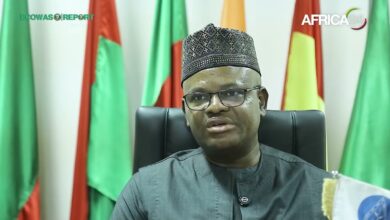
“As ECOWAS celebrates 50 years of regional integration, we must also confront a hard reality. Even though women make up more than 50% of Africa’s population, their representation in political decision-making remains dis-proportionate, with the regional average of women in national parliaments still below 20%.”
Imaan Sulaiman-Ibrahim, Minister of Women Affairs and Social Development – Nigeria
The ambition reached a new milestone in July 2026. Following the adoption by Heads of State of a declaration on gender parity in political representation, the West Africa Women’s Political Leadership Forum, held in Abuja on July 30 and 31, adopted a Regional Action Agenda. The document notably calls for reforms to electoral laws and political parties, with measurable targets.
“When the Declaration was adopted, our leaders affirmed an important truth: the strength of our democracies, the quality of our governance and the future of our development depend on the ability of all citizens, women and men, to participate in shaping the destiny of our region.”
Damtien L. TCHINTCHIBIDJA, Vice-President of the ECOWAS Commission – Togo
Another challenge is funding. Political and digital violence, stereotypes and certain practices within political parties continue to hinder women’s advancement. ECOWAS is notably working on a model law on gender-responsive political financing, aimed at reducing these barriers across member states.
“During the transition, we had seven women in the transitional government, and they contributed to ensuring that the electoral code was respected. What I take away from Guinea’s experience is the authorities’ clear willingness to move towards parity, but also the active mobilization of women’s networks, associations, women leaders and, above all, civil society.”
Hadja Sérégbé Keïta, Deputy Secretary-General of the Government – Guinea
The differences between countries nevertheless show that progress is possible when specific mechanisms are put in place. Senegal, for example, reached around 41.2% female representation in the National Assembly following the 2024 legislative elections, notably through its gender parity system. For ECOWAS, the challenge now is to turn these experiences into lasting reforms and move from roughly one-fifth of parliamentary seats held by women to full gender parity by 2035.