
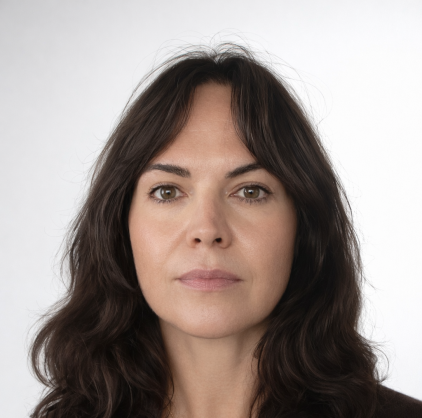
By Libby Allen, Vice President: Brand&Creative, APO Group (https://APO-opa.com).
Each March, International Women’s Day fills the calendar with campaigns, flowers, and carefully timed announcements. The day has real historical weight – born from early twentieth century demands for the right to work, vote, and organise. The question it rarely reaches is the one worth asking: not who is being celebrated, but who controls what they have built.
In African creative industries in 2026, that question has instructive answers. They’re economic, not symbolic. And they’re being written by women.
The ownership argument
In Senegal, Diarra Bousso grew up in a home where art and style were a daily language. She went on to study mathematics, worked on Wall Street, and came back to Dakar with a model for a fashion and lifestyle brand: nothing gets made until someone has asked for it.
DIARRABLU, the brand she built from her parents’ rooftop, uses proprietary mathematical algorithms to generate designs, puts them to a community vote before a single garment is cut, and produces entirely on demand – achieving a 60% reduction in waste, and cutting excess stock. Her supply chain is almost entirely Senegalese artisans. The IP – the algorithms, the methodology, the design system – is entirely hers. The value is in Bousso’s process, and the process is owned.
In South Africa, game studio Nyamakop spent years building something hard to copy. Relooted, released last month, is a heist adventure set in a futuristic Johannesburg in which the player recovers 70 real African artefacts from Western museums and private collections. The game was built by a team drawn from more than ten African countries. Mohale Mashigo – its narrative director, a novelist, and comic book writer who has also worked for Marvel and DC – is precise about ownership. Every artefact in the game maps to a real object with a documented history belonging to a named people.
That specificity isn’t just artistic rigour. The world of Relooted is built so it can’t be detached from its own context and repurposed elsewhere. Culture travels differently when it’s self-authored.
In Nigeria, Mo Abudu applies the same logic to distribution. EbonyLife Media – the production house and TV network she founded in 2012, whose films and series have drawn millions of viewing hours – launched EbonyLife ON Plus in November last year. It’s a membership-based platform designed to keep the value of African storytelling on the continent. The platform is new; the strategy is not: own the infrastructure, or someone else sets the terms.
Three countries. Three creative sectors. Find the point in the chain where value is captured. Own it.
Owned but exposed
AI-generated content has intensified the pressure. GenAI models are trained, in large part, on creative output they don’t pay for – and whether that output counts as a compensable input is now being tested in courtrooms and policy chambers. In African creative economies, where the volume of visual, narrative, and cultural material is vast and formal IP infrastructure is uneven, exposure is significant. Women’s creative output is feeding systems they don’t own.
The AI question and the infrastructure question aren’t separate. One is playing out in courtrooms. The other is playing out in markets.
Narrative control
Reaching the right markets requires a different kind of ownership. Africa isn’t a single market. It is 54 distinct countries, each with its own media landscape, languages, cultures, and decision-makers. Many communications partners offer visibility but don’t know the nuances of each market; they’re not present on the ground – so they offer approximation, which costs while the narrative is diluted.
The same logic that drives Bousso to keep her algorithms proprietary, that drove Mashigo and Nyamakop to build a game precisely, that led Abudu to build her own platforms rather than license outward – it applies here too. Who tells the story, in which markets, in whose language, through which channels: this is where narrative control is either held or lost. For brands to reach across Africa, brand communications must be African.
What happens next?
International Women’s Day will generate thousands of posts this March. It’s worth watching what happens in the days after – whether the women building ownership across African creative industries control more of their work, their distribution, and their narrative than they did the year before. That is the only measure that matters.
Distributed by APO Group on behalf of APO Group Insights.
About APO Group:
Founded in 2007 by Nicolas Pompigne-Mognard, APO Group is the communications consultancy built for performance – combining strategic advisory, on-the-ground execution, and guaranteed visibility across every African market.
Recognised with multiple international awards, including SABRE, Davos Communications, and World Business Outlook distinctions, APO Group partners with global and African organisations to deliver communications that perform – through strategy, execution, and measurable visibility.
Our founder’s advisory roles with international institutions strengthen APO Group’s access to decision-makers and reinforce our role as the continent’s most connected communications consultancy. Clients include Canon, Emirates, Nestlé, NFL, Liquid Intelligent Technologies, Afreximbank, the African Development Bank Group, GITEX Global, and the United Nations Development Programme (UNDP).
