In Guinea, the Simandou project is no longer an industrial mirage, but the engine of a profound economic transformation. Having entered its operational phase, this megaproject involving 20 billion dollars of investment is propelling the country to the forefront of growth in the sub-region, with a record rate approaching 9.3% for this year. But beyond iron, Conakry is deploying a true diplomacy of sovereignty and a strategy of diversification through its national plan « Simandou 2040 ». The stakes are immense: transforming mining revenue into heavy infrastructure and creating nearly 1.5 million jobs for the population by 2030.
Launched in its operational phase in November 2025 after long delays, Simandou is the cornerstone of the Guinean economy. Backed by 8 billion tonnes of iron ore reserves and 20 billion dollars of investments, including 670 km of railway and a deep-water port, this megaproject integrates the country into global markets with an annual target of 120 million tonnes of high-grade ore. This project is propelling Guinea to the top of the sub-region with record growth rates: 9.3% according to the AfDB, 8.8% according to the World Bank, and 8.7% according to the IMF. Beyond the revenue, Guinea is deploying « Simandou 2040 », a law passed in March 2026 establishing a 15-year plan that leverages the mining industry to modernise infrastructure, diversify agriculture, and stimulate technology.
The Simandou project cannot be complete without all of its structural components, starting with the construction of strategic infrastructure and the operationalisation of the various mining blocks: blocks 1 and 2, allocated to Winning Consortium Simandou and its strategic partner Baowu in Kérouané, as well as blocks 3 and 4, allocated to Rio Tinto Simfer and its strategic partner Chalco. »
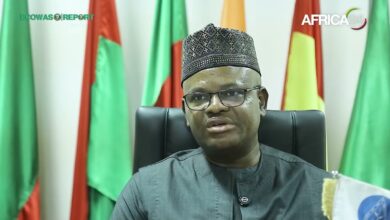
Djiba Diakité, Chairman of the Simandou 2040 Strategic Committee – Guinea
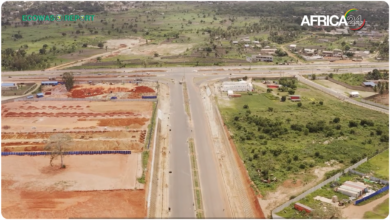
This logistical strategy relies on the 650 km TransGuinean railway and the Port of Morebaya with its three main quays. This corridor will export up to 120 million tonnes of ore per year, opening up the interior of the country while facilitating general freight and passenger transport. Geopolitically, Simandou gives Guinea a major diplomatic role thanks to 3.2 billion tonnes of ultra-high-grade reserves with 65% iron content. Essential for the decarbonisation of the global steel industry, this deposit allows the country to forge strategic partnerships with leading global industrial players.
» Among these contractual prerequisites of the project, there is the launch of studies for the construction of a steel plant from the very first commercialisations of ore. It is also an extremely important, ultimate means for us in this integrated project that will enable Guinea to process its resources locally and create greater value for the Republic of Guinea. »
Djiba Diakité, Chairman of the Simandou 2040 Strategic Committee – Guinea
However, exploiting this windfall also poses a major challenge. The projected growth must translate into jobs, with nearly 1.5 million jobs to be created by 2030, modern infrastructure, and an improvement in the living conditions of the population.
» Guinea has high expectations in terms of economic spin-offs for its projects. The issue of respecting local content is thus, for me, paramount and non-negotiable. Furthermore, the principles of multi-use and multi-service utilisation of infrastructure remain of great importance and must genuinely materialise. I remain personally committed to ensuring that the Simandou project succeeds. »
Mamadi Doumbouya, President of the Republic – Guinea
The success of the Simandou project will not be measured solely by the volume of iron exported, but by its capacity to sustainably transform the Guinean economy and society, particularly in ensuring a better conversion of these mining revenues into lasting benefits.